October 20, 2026
How Basement Waterproofing Protects Your Home’s Foundation
By @cruzddxb904

A foundation does not usually fail all at once. More often, it weakens by degrees. A little moisture seeps through a wall after heavy rain. Damp air lingers in the basement through the summer. Hairline cracks widen almost imperceptibly over a few freeze and thaw cycles. By the time a homeowner notices bowed walls, moldy smells, or uneven floors upstairs, the problem has often been developing for years.
That slow progression is what makes Basement Waterproofing so important. It is not only about keeping a lower level dry enough for storage or finishing. It is one of the most practical ways to reduce pressure on foundation walls, limit long-term structural wear, and protect the value of the entire house. When water is controlled at the basement level, the foundation is no longer being asked to resist constant moisture, hydrostatic pressure, and the material damage that follow.
Homeowners sometimes think of waterproofing as a cosmetic upgrade, especially if they have only seen a bit of dampness or a small puddle near a wall. In practice, it is closer to preventive maintenance for the structure itself. A dry basement supports a stable foundation. A wet one invites movement, decay, and expensive repairs.
Why water is such a serious threat to foundation systems
Concrete looks solid and permanent, but it is not immune to water. It is porous by nature. Concrete block, mortar joints, and the cold joint where the floor slab meets the wall are all common pathways for moisture. Even poured concrete walls, which tend to be stronger and less porous than block, can allow seepage through cracks or weak points if water pressure around the outside becomes high enough.
The real enemy is not simply the presence of water. It is persistent saturation and pressure. When soil around a house becomes waterlogged, it expands and grows heavier. That wet soil presses against basement walls from the outside. Contractors refer to this as hydrostatic pressure. Over time, that pressure can force water through tiny openings, widen existing cracks, and in some cases contribute to wall deflection or inward movement.
I have seen basements where the homeowner assumed the issue was minor because the leak showed up only during spring storms. Once the drywall was removed and the wall exposed, there were white mineral deposits, deteriorated mortar, and signs that the pressure had been working on that wall for a long time. The water stain on the floor was just the visible symptom. The structural stress had been building quietly behind the finished surface.
Foundation systems are also affected by changing moisture conditions in the soil below and beside the home. If one side of the house stays consistently wetter than another, the settlement pattern can become uneven. In expansive clay soils, the cycle is even harsher. Wet periods cause swelling, dry periods cause shrinkage, and the foundation moves with those fluctuations. Basement Waterproofing cannot solve every soil condition, but it plays a central role in stabilizing the environment around the structure.
The connection between basement moisture and foundation damage
Moisture damage in a basement often starts small enough to dismiss. A faint musty odor. Efflorescence on the wall. Paint bubbling near the floor. Yet these are often early warnings that water is either penetrating the foundation or condensing because conditions inside are consistently damp.
Once moisture becomes routine, several things happen at the same time. First, repeated wetting weakens vulnerable materials. Mortar joints in block foundations can soften or deteriorate. Small cracks can enlarge. Wooden framing that rests near masonry surfaces may absorb moisture and eventually rot. Steel components, including columns, fasteners, and reinforcement near the surface, may corrode.
Second, moisture creates an environment where mold grows easily. Mold itself is not usually a structural issue, but the conditions that allow it to thrive often signal prolonged dampness that is affecting surrounding materials. A basement that smells earthy or stale is often telling you that moisture is not being managed well.
Third, water pressure outside the foundation does not stay constant. It rises during snowmelt, long rains, and periods when gutters or grading direct runoff toward the home. A wall that seems fine most of the year may be under severe stress for a few critical weeks. That repeated loading matters. Just as bending a paperclip back and forth eventually weakens it, repeated seasonal pressure can slowly worsen foundation defects.
What Basement Waterproofing actually does
There is a lot of confusion around the term because people use it to describe very different approaches. Some think it means painting a sealant on interior walls. Others assume it always involves a full excavation around the house. In reality, Basement Waterproofing can include a range of strategies, and the right system depends on how water is getting in and what the foundation is dealing with.
At its core, waterproofing aims to do three jobs. It reduces the amount of water reaching the foundation, relieves pressure when water does accumulate, and blocks or redirects any moisture that still finds a path toward the basement interior.
That usually means some combination of exterior and interior measures. Exterior work may include correcting grading, extending downspouts, installing or replacing footing drains, applying waterproof membranes to foundation walls, and protecting those membranes with drainage boards. Interior systems may include perimeter drains under the slab, sump pumps, vapor barriers, and crack injections. Neither approach is automatically better in every case. The best results come from matching the method to the mechanism of the problem.
A homeowner with occasional seepage at a single wall crack might need a targeted repair and improved drainage outside. A homeowner with chronic water entry along the floor perimeter may need a more comprehensive interior drainage system. A home with severe exterior water loading, failed footing drains, and a finished basement full of moisture damage may need both interior and exterior work to truly protect the foundation.
Exterior water management, the first line of defense
When I walk around a house with a wet basement, the first clues are often outside. Short downspouts dumping water a foot from the wall. Mulch piled against siding. Soil pitched toward the house instead of away from it. A patio slab settled just enough to send runoff back against the foundation. These details seem minor, but they are often the start of the entire problem.
Waterproofing works best when the bulk of the water is intercepted before it can saturate the soil beside the foundation. Good grading helps surface water move away from the home. Functional gutters collect roof runoff instead of letting it pour directly at the perimeter. Downspout extensions carry that water farther out, ideally well beyond the backfilled soil around the basement wall.
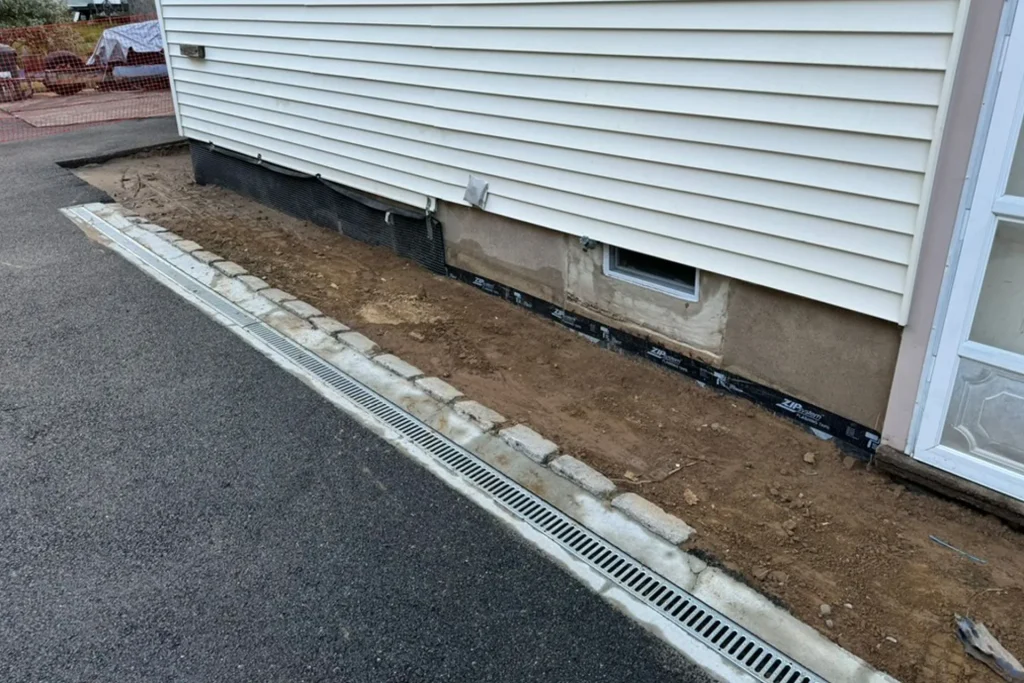
When exterior excavation is part of the solution, it allows for more than just patching a leak. It gives access to the outside face of the foundation, where professionals can inspect cracks, apply a true waterproof membrane, and install drainage components that relieve pressure before it builds. This approach is often the most direct way to protect the wall itself, because it tackles water where the problem begins.
That said, exterior excavation is disruptive and more expensive than many interior systems. It can involve landscaping removal, access limitations, and challenges around decks, porches, or tight lot lines. This is where practical judgment matters. Not every damp basement requires a full dig. But when a foundation wall shows signs of significant water exposure or structural stress, exterior waterproofing can be the most durable form of protection.
Interior systems and why they matter even when the walls look solid
Some homeowners resist interior waterproofing because they feel it only manages symptoms. That can be true if the system is poorly designed or used as a shortcut where structural repair is needed. But a proper interior drainage system is not simply hiding water. It is controlling it before it causes interior damage and, in many homes, relieving the pressure pathway that forces seepage inside.
An interior perimeter drain is typically installed along the inside edge of the basement floor, next to the wall footing. Water that reaches the wall or rises beneath the slab is directed into this channel and moved to a sump pit, where a pump discharges it safely away from the house. This is especially useful in areas with high water tables or where exterior excavation is impractical.
The foundation still benefits because the system lowers the amount of standing water and pressure that would otherwise express itself through cracks, joints, and floor seams. It also keeps the basement environment drier, which protects framing, insulation, flooring, and air quality.
Sump pumps deserve special mention here. A reliable sump system, ideally with a battery backup, can be the difference between a controlled drainage event and a flooded basement during a storm outage. I have seen homes with otherwise decent waterproofing fail because the pump was undersized, poorly maintained, or plugged into a circuit that tripped during heavy rain.
Foundation cracks, what they mean and when waterproofing helps
Not every crack is a structural emergency, but every crack deserves interpretation in context. A thin vertical shrinkage crack in poured concrete may be stable and mainly a seepage issue. A horizontal crack in a block wall is a different story. Stair-step cracking in masonry can indicate movement. Cracks that widen over time, show displacement, or accompany bowing walls warrant closer evaluation.
Waterproofing helps in two ways. First, it prevents water from exploiting those openings. Second, by reducing external pressure and moisture cycling, it can slow the forces that contribute to worsening movement. What waterproofing does not do is reverse structural failure. If a wall is already bowing inward or the footing has settled, that may require reinforcement, stabilization, or underpinning in addition to moisture control.
This distinction is important because some homeowners are sold a coating or crack filler when the actual issue is broader. A quality assessment looks at the wall type, crack pattern, site drainage, age of the home, and whether there are signs upstairs such as doors sticking or floors sloping. Basement Waterproofing should be part of a diagnosis, not a one-size-fits-all product.
Moisture you cannot see still causes damage
A basement does not have to flood to harm the foundation and the home around it. High humidity alone can do a surprising amount of damage. In summer, warm outdoor air enters the cool basement and condenses on cold surfaces. Pipes sweat. Rim joists stay damp. Stored cardboard softens. Insulation loses effectiveness. Over months and years, this kind of chronic dampness can degrade finishes and support mold growth even if no liquid water ever appears on the floor.
This matters to the foundation because wet conditions inside often point to moisture migration through masonry or the slab. Concrete can wick moisture from the ground continuously. That means the basement environment becomes a reservoir of damp air, which affects every adjacent material. A dehumidifier can help manage the symptom, and in some basements it is a necessary part of the solution, but it should not be mistaken for full waterproofing.
A truly protective approach identifies whether the basement is dealing with water entry, vapor transmission, condensation, or some combination. The answer shapes the remedy.
Signs that waterproofing may be protecting more than your basement
Homeowners often wait until there is visible water, but earlier warning signs are common if you know what to look for:
- white chalky residue on basement walls
- peeling paint or blistering wall coatings near the floor
- musty odors that persist even in dry weather
- cracks that seem to get wetter or darker after rain
- rust on metal columns, appliances, or fasteners in the basement
None of these automatically means severe structural damage is underway. Still, they indicate that moisture is active, and active moisture around a foundation is rarely something to ignore for long.
How waterproofing affects the rest of the house
It is easy to think of the basement as separate from the living space above, especially in older homes where the lower level is unfinished. In reality, the basement influences the whole house more than many people realize. Air moves upward. Moisture and mold odors migrate. Structural movement at the foundation shows up in interior cracks, sticky windows, and uneven floors.
When Basement Waterproofing is done well, the benefits often reach far beyond a dry storage area. The house tends to smell cleaner. HVAC equipment runs in less humid air. Finished spaces stay more stable. Flooring above may feel less affected by seasonal shifts if moisture conditions around the structure are better controlled.
There is also a resale angle. Buyers may forgive an outdated basement. They are much less comfortable with a damp or suspicious one. Water stains, fresh patchwork without explanation, or visible efflorescence immediately raise concerns about the foundation, whether justified or not. A documented waterproofing system, especially one installed to address a diagnosed issue, often reassures buyers that the home has been cared for structurally.
Choosing the right approach without overbuying
The challenge for homeowners is that waterproofing proposals can range from a few hundred dollars to tens of thousands, and the language used in sales presentations is not always precise. One contractor may recommend a crack injection. Another may push a full interior drain system. A third may insist on complete exterior excavation.
The best decisions usually come from asking a few grounded questions. Where is the water coming from, surface runoff, wall seepage, footing drainage failure, high groundwater, or interior condensation? Is the foundation currently moving, or is the concern primarily moisture control? What evidence supports the recommendation? What happens if the proposed solution is not installed?
A sensible plan often starts with the least invasive corrections that address obvious water sources outside. Gutters, downspouts, grading, and discharge location matter more than many homeowners expect. If those improvements do not fully solve the issue, then a more robust waterproofing system https://reidneas232.valoradigest.com/posts/how-to-compare-basement-waterproofing-estimates-with-confidence may be justified. What you want to avoid is paying for a major system while leaving simple exterior water problems untouched.
Here are practical points worth weighing before committing to a project:
- whether the problem is isolated or house-wide
- how often moisture appears and under what weather conditions
- the age and type of foundation wall
- access constraints around the exterior of the home
- whether structural repair is needed alongside waterproofing
A good contractor should be comfortable discussing trade-offs. Interior systems are often faster and less disruptive. Exterior systems may offer more direct wall protection. Combined systems cost more but can be the right answer for homes with chronic water pressure. The best recommendation is usually the one that fits the evidence, not the biggest package.
Maintenance matters after the installation
One of the biggest misconceptions about waterproofing is that it is a one-time fix you never think about again. Some parts of it are indeed long-lasting, such as membranes, crack repairs, or drainage improvements. Others require periodic attention.
Sump pumps should be tested. Discharge lines should stay clear and route water far enough away from the foundation that it does not cycle back. Gutters need cleaning. Downspout extensions need to remain connected. Grading should be checked after major landscaping or settling. If window wells are present, they should stay free of debris that traps water against the wall.
I once looked at a basement where a well-installed interior system had been blamed for failure. The actual issue was simpler. The discharge line had frozen in winter and partially clogged with debris afterward, so the pump was cycling against resistance and not moving water effectively. The homeowner did not need a new waterproofing system. They needed maintenance.
That kind of story is common. Waterproofing protects foundations best when it is treated as part of the home’s broader water management strategy, not as a product that replaces all other upkeep.
The long-term value of keeping a foundation dry
Foundation repairs are among the most expensive problems a homeowner can face, not only because of the direct construction costs, but because structural issues often ripple outward into finishes, framing, doors, flooring, and exterior surfaces. Waterproofing is not free, but compared with rebuilding a failing wall or correcting major settlement, it is usually the more economical path.
More importantly, it preserves options. A dry, stable basement can remain unfinished and functional, or it can be renovated later with confidence. A wet basement narrows those options and steadily raises the risk that minor defects become major ones.
That is the real protective power of Basement Waterproofing. It interrupts the chain reaction that starts with water in the soil and ends with damage to concrete, framing, air quality, and livability. It reduces stress on the foundation, helps the house behave more predictably through the seasons, and gives homeowners a far better chance of catching small issues before they become structural ones.
If you think of a foundation as the house’s load-bearing skeleton, waterproofing is not a cosmetic add-on. It is one of the most direct ways to keep that skeleton dry, stable, and capable of doing its job for decades.
ARD Waterproofing
98 Smull Ave, West Caldwell, NJ 07006, United States
+1 917-691-8411
FAQ About Basement Waterproofing
Can you 100% Waterproof a Basement in West Caldwell?
A properly designed system can substantially reduce basement water intrusion, but no method can promise protection against every flood, equipment failure, or future change in site conditions. The first step is identifying whether moisture comes from surface runoff, groundwater, plumbing, or condensation. Solutions may include grading and gutter improvements, drainage, foundation repairs, and a sump system. Review the specific coverage and exclusions of any written warranty.
How much does it cost to professionally waterproof a basement in NJ?
There is no single price that fits every basement. Cost depends on the cause of the leak, the area needing work, access, excavation requirements, drainage design, sump equipment, and restoration of disturbed finishes or landscaping. Request an on-site assessment and an itemized written estimate that explains the scope, exclusions, and maintenance requirements before comparing proposals.
How long does foundation waterproofing last in West Caldwell, NJ?
Service life varies with the waterproofing materials, installation quality, soil and water conditions, and maintenance. Drainage components and pumps may require servicing or replacement even when other parts of the system remain functional. Keep gutters, drainage outlets, and sump equipment maintained, and have recurring leaks or changes in foundation condition assessed. Ask for product-specific expectations and written warranty terms rather than relying on one lifespan for the entire system.
❧